

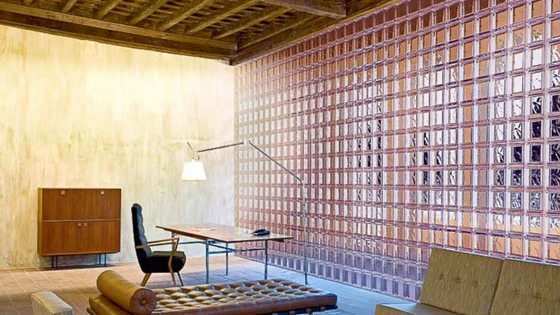
Modern interiors often need to solve two competing problems at the same time: bringing in more light while preserving privacy. Traditional walls can make a room feel closed off, while clear glass may expose more than the space allows.
Glass blocks offer a different approach. They can create separation, introduce visual interest and allow light to move through a space without making every area fully visible. This makes them useful in both residential and commercial design.
Start With the Purpose of the Wall
Before choosing a glass block system, it helps to decide what the wall needs to accomplish. Some projects are mainly decorative, while others are intended to divide rooms, improve privacy or bring borrowed light into darker areas.
Understanding the purpose makes it easier to select the right size, pattern and level of transparency. A bathroom divider, office partition and feature wall may all require different design choices.
Consider How Much Light You Want
Glass blocks can transmit light while softening the direct view through the wall. This can be especially useful in spaces where natural light is limited, but privacy still matters.
The amount of light depends on the block style, texture and colour. Clearer designs generally create a better effect, while heavily patterned options diffuse light more strongly and provide greater visual separation.
Choose the Right Source for the Project
Material quality and product variety can influence both appearance and installation. Anyone searching for a glass block supplier toronto should consider available sizes, patterns, technical information and whether the products suit the intended application.
It is also useful to confirm lead times and quantities before construction begins. Coordinating materials early can help prevent delays once framing or installation work is underway.
Use Glass as an Architectural Feature
Glass block walls do not need to be purely functional. They can become a strong design element when used in entrances, stair areas, retail interiors or feature partitions.
Designers working with architectural glass bricks toronto may use them to create rhythm, texture and changing light patterns throughout the day. The material can feel both contemporary and distinctive when it is integrated thoughtfully with surrounding finishes.
Privacy Levels Can Be Adjusted
Not every block offers the same amount of visual screening. Some patterns blur shapes while still allowing significant light through, while others provide much stronger privacy.
This allows designers to match the material to the room. A shower wall may require more obscurity than a hallway partition, while a restaurant or retail feature may prioritize visual effect over complete privacy.
Think About Scale and Proportion
Glass blocks have a strong geometric appearance, so proportion matters. A large wall can become visually dominant, while a smaller panel may work better as an accent.
The dimensions of the blocks should suit the size of the room and the surrounding architecture. Consistent spacing and alignment can make the installation feel deliberate rather than added as an afterthought.
Combine Glass With Other Materials
Glass blocks can work well alongside concrete, timber, metal, tile and painted surfaces. The contrast between translucent glass and more solid materials can make both elements stand out.
The surrounding palette should be planned at the same time as the glass. Warm timber may soften the look, while metal and concrete can create a more industrial or contemporary effect.
Plan Installation Details Early
Successful installations depend on more than the visual design. Wall support, joints, edges and transitions all need to be considered before construction begins.
Large features may have different structural requirements from small decorative panels. Consulting product specifications and experienced installers early can help ensure that the design is practical as well as attractive.
Consider Maintenance
Glass blocks are generally easy to wipe, but joints and surrounding surfaces can collect dust or moisture depending on the location.
Bathrooms and kitchens may require more frequent cleaning than decorative interior walls. Selecting appropriate joint materials and maintaining them properly can help keep the installation looking consistent over time.
Use Lighting to Enhance the Effect
Artificial lighting can change the appearance of glass blocks after dark. Backlighting, side lighting or nearby fixtures can emphasize texture and create different visual effects.
This can be particularly effective in hospitality, retail and feature-wall applications. Planning lighting alongside the wall design creates more opportunities than treating it as an entirely separate element.
Conclusion
Glass blocks can provide a useful balance between openness and privacy while adding texture and architectural character. Their value goes beyond simply replacing a solid wall or clear pane.
The best results come from considering light, pattern, scale, installation and surrounding materials together. When these factors are planned carefully, glass block features can become both practical and visually distinctive parts of a modern space.